

Orthodontic treatment can feel intimidating as many people worry about discomfort and the prospect of giving up their favourite foods during the process. Traditional braces, with brackets and wires, often come with dietary rules and the risk of pain in the mouth1.
However, how much you need to change your eating habits depends on the type of treatment you choose. Modern alternatives like Invisalign® clear aligners offer a far more flexible experience, allowing you to straighten your teeth with minimal diet restrictions and hassle.
In this article, we’ll compare eating with braces versus Invisalign®, discuss tooth-friendly food choices, and highlight the lifestyle benefits of being able to “eat what you love” on your journey to a new smile.
Traditional braces: what you can’t eat and why
Traditional metal braces are effective, but they require careful dietary modifications. Braces are composed of delicate brackets, bands and wires that can be damaged by certain foods2.
Moreover, the hardware creates nooks and crannies where food can get trapped, increasing the risk of plaque build-up and tooth decay if one isn’t extra careful2. To protect both your orthodontic appliances and your oral health, dentists and orthodontists universally advise avoiding several types of foods when wearing braces:
Hard foods (nuts, hard candies, ice, etc.): Biting down on very hard items can snap wires or pop brackets off your teeth2. For example, chomping on a hard candy or an almond could easily break a bracket or bend the archwire, which means an emergency trip to the orthodontist and potentially extended treatment time.
Sticky or chewy foods (toffees, caramels, chewing gum): Gooey, sticky sweets can adhere to braces and even pull pieces loose2. Caramels and chewing gum get painfully stuck on wires and around brackets, and they’re extremely difficult to clean off. They can also tug on the brackets with each chew, risking loosening them.
Crunchy snacks (popcorn, chips, hard tacos): These can easily crack brackets or get lodged in your braces2. Popcorn kernels, for instance can wedge themselves in between braces, causing irritation or even infections. Hard pretzels or crisps can put too much pressure on the brackets as you bite down, potentially breaking them.
Biting into firm foods (whole apples, raw carrots, corn on the cob): Using your front teeth to bite into something firm can dislodge brackets or bend wires. Orthodontic experts recommend cutting foods like apples into slices, removing corn from the cob, and slicing hard raw vegetables into sticks or small pieces3. This way, you still enjoy these healthy foods without risking your appliance.
Sugary and acidic treats: While not a mechanical risk, sweets, fizzy drinks and desserts pose a serious decay risk when you have braces. The brackets and bands make it harder to fully clean your teeth, so sugar sitting around them can lead to cavities and enamel demineralisation (white spots)2. It’s best to limit sticky sweets and rinse or brush soon after indulging, to avoid prolonged sugar contact on teeth.
In short, braces wearers should stick to softer options and be mindful when chewing. Soft breads, pastas, cooked vegetables, dairy products, and cut-up fruits are generally safe choices, especially in the first days after an adjustment when your teeth may be sore. Following these food guidelines is crucial because every broken bracket or wire could set your treatment back by needing repairs2. By avoiding “brace-unfriendly” foods, you protect your investment and ensure your journey to a better smile stays on track.
Invisalign® clear aligners: eat what you love
One of the biggest advantages of Invisalign® clear aligners is dietary freedom. With Invisalign®, there are no forbidden foods; you truly can continue to eat all the things you love, from crunchy salads to chewy baguettes, without worrying about damaging an appliance.
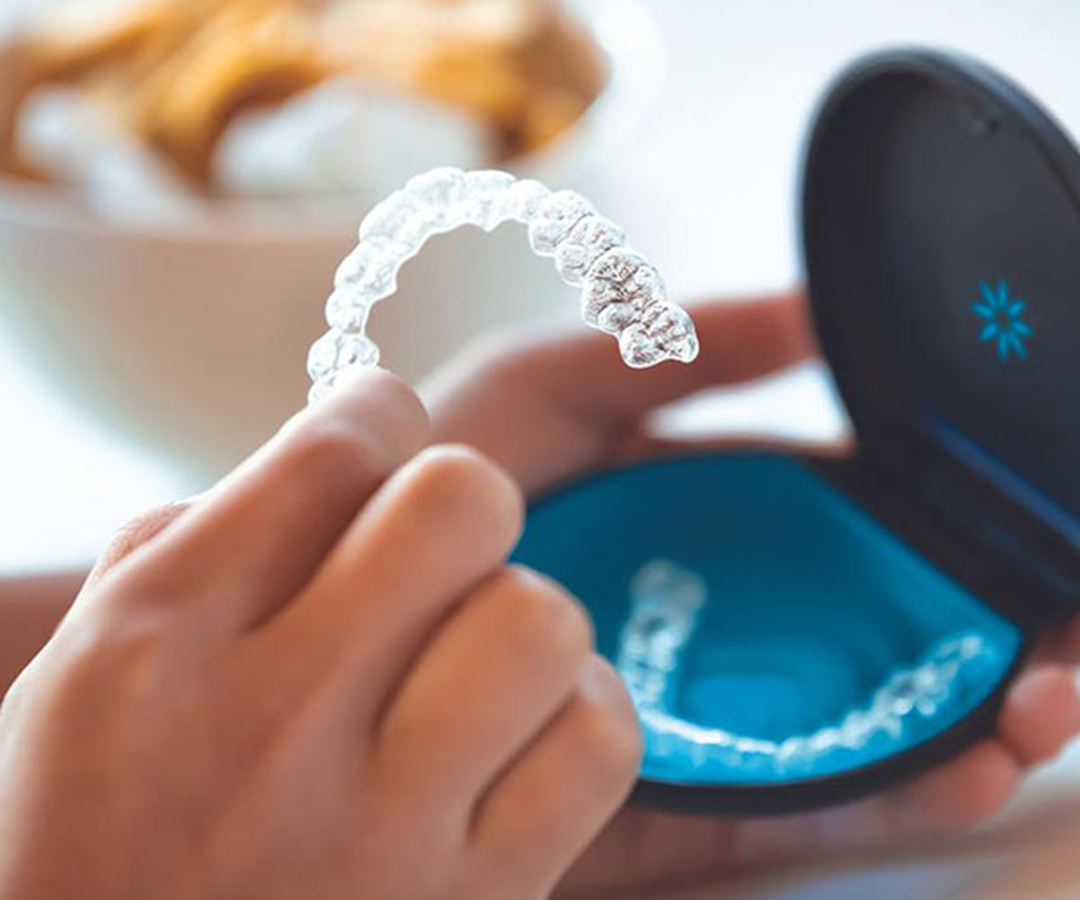
How is this possible? Invisalign® clear aligners are removable, so you simply take them out at mealtimes. This means the aligners won’t be in your mouth to restrict what you chew, unlike fixed braces.
There are a few simple guidelines Invisalign® patients should follow to ensure best results: Always remove your aligners before eating or drinking anything other than water. The clear plastic trays are not designed to withstand the forces of chewing or the staining from foods and drinks, so you must pop them out and store them in their case during meals and snacks. After you’ve enjoyed your meal, brush and floss your teeth before putting the aligners back in.
Good hygiene is key because you don’t want food particles trapped between your teeth and the aligner, as this could lead to decay or discoloration of the enamel (the aligner can hold food against your teeth, so your teeth must be clean).
Finally, remember to put the aligners back on promptly and wear them for the recommended 20–22 hours per day. You have the freedom to eat whenever you want, but you’ll need to balance it with wearing your aligners most of the day to ensure effective treatment. Patients often get into a routine of removing the trays to eat, then cleaning up and replacing them straight after their meal, and this way, you truly can 'eat normally' without compromising your orthodontic progress.
Apart from those small habits, which quickly become second nature, Invisalign® imposes no diet modifications. Want to bite into a crisp apple or enjoy a sticky toffee pudding? Go ahead, just take your trays out first. This flexibility is a huge relief for people who dread the food restrictions of braces.
Smart food choices for a healthy smile
Whether you’re in braces or aligners, choosing tooth-friendly foods will benefit your oral health tremendously. Since Invisalign® lets you eat anything, it’s still wise to make smart nutritional choices that support a healthy smile. Here are some diet tips backed by dental professionals and nutritionists for keeping your teeth strong and gums healthy:
Calcium-rich foods: Dairy products like milk, cheese, and yogurt are excellent for your teeth. They are high in calcium and phosphates, which help remineralise tooth enamel and keep your teeth strong4. Cheese in particular can also neutralise acids in the mouth. If you’re dairy-free, look for fortified plant milks or leafy greens (kale, broccoli) to get your calcium.
Crunchy fruits and veggies: High-fibre produce such as apples, carrots, and celery act as natural toothbrushes. Biting and chewing them stimulates saliva (which neutralises acid) and helps scrub the surfaces of your teeth4. These foods are rich in vitamins and minerals too. Just remember, if you have braces, to cut hard fruits and veggies into smaller pieces as mentioned.
Water (especially fluoridated water): Make water your go-to drink for hydration. Fluoride in drinking water strengthens tooth enamel, making it more resistant to decay4. Sipping water during and after meals also helps wash away food debris and sugars. In contrast, frequent sipping of sugary or acidic drinks (like soda or fruit juice) bathes your teeth in acids – so water is by far the healthiest choice for your smile.
Lean proteins and whole grains: A balanced diet is important for gum and tooth health. Lean proteins (fish, skinless poultry, eggs, beans) provide phosphorus and protein that support tissue repair and tooth structure5. Whole grains and legumes offer magnesium and B-vitamins which are also beneficial for oral health.
Limit sugar and acidic treats: Perhaps the most crucial dietary advice for a healthy smile is to minimise your sugar intake. Sugar fuels oral bacteria, which produce acid that erodes tooth enamel and causes cavities5. Sweets, biscuits, sweet fizzy drinks, and even fruit juices can contribute to decay if consumed frequently. Similarly, very acidic foods or drinks (like soda, sports drinks, citrus) can weaken enamel. You don’t need to cut out sweets entirely, just enjoy them in moderation and try to have them at mealtimes rather than constant snacking. And of course, brush your teeth regularly with fluoride toothpaste.
By focusing on these tooth-friendly foods and habits, you’ll not only support your orthodontic treatment but also set yourself up for long-term oral health. A nutritious diet helps your teeth and gums withstand the forces of moving teeth, heal any soreness, and keeps your smile bright. Think of it as giving your teeth the best possible “fuel” while they’re being straightened.
Real benefits beyond food
The ability to eat what you want with Invisalign® isn’t just about indulgence, it translates into meaningful quality of life benefits during orthodontic treatment.
With traditional braces, many patients feel daily life requires constant caution: avoiding certain meals, cutting food into tiny bits, worrying about something getting stuck or causing a bracket to break.
In contrast, Invisalign® offers a far more normal day-to-day experience. You can go out to dinner with friends, celebrate holiday meals, or grab a quick snack on the go without special arrangements. Simply slip out your aligners and enjoy your meal. There’s no need to decline the crunchy salad or fear the corn-on-the-cob at a BBQ.
This freedom in eating means less stress and more confidence in social situations, you won’t be the one saying “I can’t eat that” or worrying about obvious food stuck in braces.
Beyond just diet, the aligner approach offers other everyday comforts. There are no emergency orthodontist visits due to broken brackets or wires poking your cheek, a common inconvenience with fixed braces.
Cleaning your teeth is easier too: you can brush and floss as usual after removing the trays, so it’s simpler to maintain good oral hygiene. Many Invisalign® patients truly appreciate that they don’t have to change their established routines much, whether it’s enjoying a morning coffee or sticking to a favourite fitness smoothie diet, everything is compatible with Invisalign® as long as you keep the aligners in your daily schedule.
Orthodontic treatment no longer means months of food restrictions and lifestyle disruption. While traditional braces still work wonders for straightening teeth, they do come with dietary do’s and don’ts that can be challenging.
Invisalign® clear aligners, on the other hand, offer a modern, flexible alternative, letting you savour your favourite foods freely and live your routine with minimal interference, all while moving your teeth to a healthier alignment.
By making smart food choices to keep your teeth strong (and avoiding a few brace-busting snacks if you’re in brackets), you can ensure your smile journey is both successful and enjoyable. After all, the goal is a beautiful, healthy smile at the end, and there’s no reason you shouldn’t be smiling throughout the process too, especially when you can dine on what you love. Eat smart, keep smiling, and enjoy the best of both worlds with Invisalign®.

Want to straighten your teeth without giving up your favorite foods?
Invisalign® aligners are removable, so you can enjoy the foods you love while keeping your treatment on track with good oral hygiene. Find an Invisalign doctor near you to explore your options.