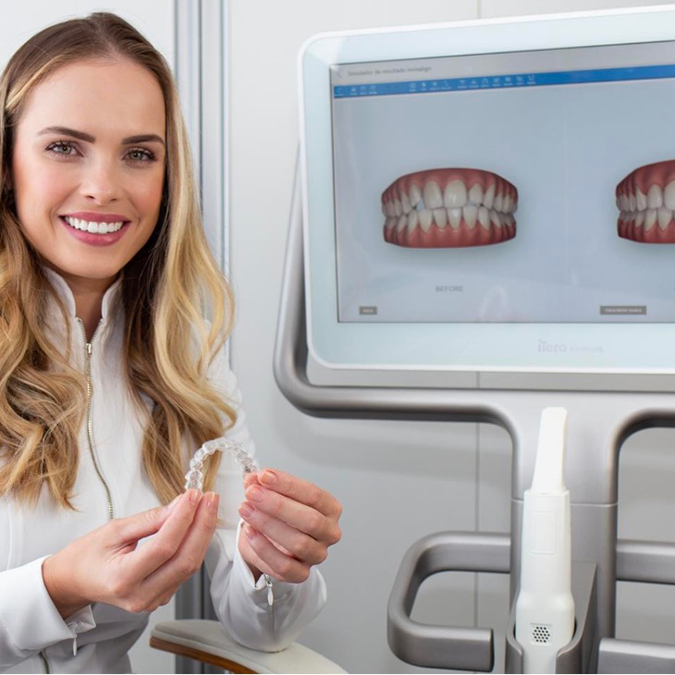
Common issues braces or Invisalign clear aligners can fix
Braces and clear aligners are designed to correct a wide range of orthodontic problems. In fact, most common alignment and bite issues can be treated with these appliances. Here are some of the orthodontic problems that braces or clear aligners can fix:
Crowded or crooked teeth
Lack of space in the jaws can cause teeth to overlap, rotate, or get “blocked out” (unable to erupt in the correct position). Orthodontic treatment uses steady pressure to guide crowded or misplaced teeth into proper alignment. This not only straightens the smile but also makes teeth easier to clean.
Spacing and gaps
If you have noticeable gaps between teeth (diastemas), braces or aligners can move the teeth closer together to close those spaces. Correcting excessive spacing isn’t just cosmetic, it can help prevent food debris from accumulating and reduce plaque traps that could harm your gums.
Overbite
An overbite means the upper front teeth excessively overlap the lower front teeth. Severe overbites can lead to the lower front teeth biting into the gum behind the top teeth or cause uneven tooth wear. Braces and aligners can adjust the vertical overlap so that the bite is balanced.
Underbite
In an underbite, the lower front teeth protrude in front of the upper teeth. This often results from the lower jaw being too far forward or the upper jaw too far back. Orthodontic treatments can gradually correct an underbite by realigning teeth and sometimes guiding jaw growth in younger patients.
Crossbite
A crossbite occurs when some upper teeth sit inside the lower teeth rather than outside. It can happen with front teeth or back teeth. This misalignment can cause asymmetric jaw growth or tooth wear if not addressed. Braces or Invisalign clear aligners can correct crossbites by moving teeth into the proper relationship.
Open bite
If your front teeth don’t meet when you bite down, leaving an opening, it’s called an open bite. This can make biting into foods difficult and may affect speech. Orthodontic treatment can bring the teeth together by moving either the upper, lower, or both sets of teeth into proper position.
Invisalign clear aligners vs. braces: how to choose
Both traditional braces and Invisalign clear aligners have proven to be effective at straightening teeth. Deciding which option is best for you will depend on your specific orthodontic problems, your lifestyle, and your personal preferences. Here we compare braces and clear aligners across several key factors:
Effectiveness and range of treatment
Braces are a versatile, time-tested solution. Because they are attached to the teeth and can apply more complex forces, bracescan treat a wide range of malocclusions, including very complex or severe cases.
Appearance
One of the biggest draws of clear aligners is their appearance. Aligners are made of nearly transparent plastic, so they are very hard to notice when worn. This “invisible” quality is a major advantage for patients who want to straighten teeth discreetly. Traditional metal braces, on the other hand, are quite visible on the teeth. Even ceramic braces (with tooth-coloured brackets) or lingual braces (attached to the back of teeth) are more noticeable than clear aligners in most cases. Braces today are smaller and can be customized with different colours, but they still are not as subtle as aligners.
Removability and convenience
Braces are fixed appliances – the brackets are bonded to your teeth and remain in place for the entire treatment. You cannot take them off, which means you’ll have to avoid certain foods (like very sticky or hard items that could break the brackets/wires) and adjust your oral hygiene routine to clean around the braces. Clear aligners, by contrast, are removable. You take them out to eat and drink, and for brushing and flossing. This means no food restrictions (you can eat normally once the aligners are out), and it’s easier to maintain good oral hygiene since you can brush and floss without obstructions.
Comfort
Straightening teeth involves applying pressure, which inevitably causes some soreness or discomfort whether you have braces or Invisalign clear aligners. However, the type of discomfort can differ. Braces have metal components, such as brackets and wires, that can rub the inside of your lips and cheeks, potentially causing soreness or irritation, especially in the first days or after adjustments.
Orthodontic wax and time allow those areas to toughen up, and most patients get used to the feeling of braces. Aligners are made of smooth plastic and tend to be gentler on the soft tissues, so you won’t have sharp brackets poking your cheeks. Many patients find that aligners have less of the poking irritation that braces can cause. Overall, Invisalign clear aligners are often reported to be more comfortable day-to-day, but individual experiences vary.
Hygiene and care
Braces require diligence to keep clean. Food can easily get trapped around brackets and under wires, so brace-wearers must brush and floss carefully (using special tools like floss threaders or interdental brushes) to prevent plaque buildup around the hardware. There’s also a risk of staining or even decay if oral hygiene is poor with braces, since any plaque left around brackets can damage enamel.
Clear aligners make oral care simpler: you remove them to brush and floss normally, cleaning all surfaces of your teeth. The aligners themselves need to be cleaned regularly as well to keep them clear and odour-free.
The technology behind both braces and aligners continues to improve, and either way, the goal is the same – a healthy, properly aligned smile. The best approach is the one that safely and effectively achieves that goal for your specific case.
When to visit an orthodontist for a consultation
Deciding when to see an orthodontist is an important step. The general guideline for children is clear: have your child’s first orthodontic check-up no later than age 7, as recommended by the American Association of Orthodontists. By age 7, a mix of baby teeth and adult teeth are present, and an orthodontist can spot developing problems even if the child isn’t anywhere near braces yet.
For older children and teens who missed that initial check-up, you should visit an orthodontist as soon as any signs of a problem appear, or simply by the early teen years when all the adult teeth are in. Most orthodontic treatment for kids begins around ages 8–14, once enough permanent teeth have come in and while the jaws are still growing. Dentists will often refer you if they spot an issue during cleanings, but you don’t strictly need a referral – parents can directly consult an orthodontist if they have concerns.
In fact, many orthodontic offices offer an initial consultation for free, so it’s easy to get an expert opinion on whether treatment is needed. If you’re uncertain, a consultation can provide peace of mind – either the orthodontist will say, “Everything looks fine, no braces needed,” or they will explain what might need fixing, when, and why.
Adults may wonder if it’s “too late” for them – and the answer is absolutely not. Healthy teeth can be moved at any age. These days a significant number of orthodontic patients are adults. If you’re unhappy with your teeth or experiencing bite issues, you can visit an orthodontist for a consultation regardless of how old you are. As long as your gums and bones are in good shape, you could get braces or Invisalign clear aligners in your 20s, 40s, or even 60s. Adults should especially consider a consultation if they have untreated problems from youth or new concerns.